A Fullstack Developer works across frontend and backend to deliver end-to-end solutions. The program spans web and mobile technologies for complete applications.
Language of course:
Ukrainian
Format of the event:
Online
Add to collection
you haven't created a collection yet
Add Collection
Course overview
Description generated based on course syllabus and open data.
A Fullstack Developer handles the full web cycle: client-side features, server logic, and data. This enables building prototypes, integrating APIs, and maintaining applications end to end.
Fullstack Bootcamp program: frontend and backend
- HTML and CSS — semantic layout, grids, responsive design, styling, component-driven UI and design systems.
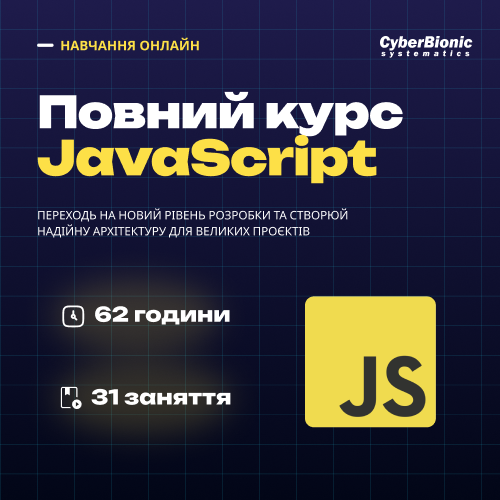
- JavaScript — data types, events, async flows, DOM work, API requests, interactive elements.
- React — components, state, routing, state management, SPA patterns and integrations.
- Node.js — server logic, REST APIs, databases, authentication, files and streams.
- React Native — cross-platform mobile apps for iOS and Android.
- Soft Skills — teamwork, communication, technical docs, interviewing, technical English.
Who this Fullstack Bootcamp suits and who it does not
Who benefits from the Fullstack Developer track
- Beginners seeking a structured path across frontend and backend.
- Frontend or backend engineers expanding to a full-stack toolkit.
- Adjacent IT roles needing full-stack skills for project delivery.
Who may not prefer a full-stack format
- Those expecting quick outcomes without consistent practice.
- Specialists who wish to remain in a narrow, single-stack scope.
Problems and what changes: the Fullstack Developer route
- Fragmented frontend or backend knowledge → a cohesive client-server understanding.
- Integration hurdles → confident API, auth, state, and data handling.
- Lack of practical cases → a portfolio spanning web and mobile projects in React and Node.js.
- Unclear tool choices → a clear stack: HTML, CSS, JavaScript, React, Node.js, React Native.
Comparison with alternatives: Fullstack Bootcamp vs other paths
- Self-learning: flexible but harder to structure; bootcamp aligns modules by complexity and practice.
- Single-stack courses: depth in one side; full-stack builds client-server linkage.
- Formal education: broader fundamentals; bootcamp emphasizes applied tasks and current tools.
Outcomes from completing the Fullstack Bootcamp
- Ability to build SPA with React and API integrations.
- Server services on Node.js with REST organization.
- Foundational mobile apps in React Native with shared logic.
- Experience in teamwork, code review, and repository workflows.
- A portfolio including frontend, backend, and mobile interfaces.
Evaluation
Only authorized users can leave reviews and rate
Log in »


 копия.png)